Alkee: The Bold Display Font for Impactful Branding
Capturing attention in a crowded digital landscape requires more than just a good message; it demands a visual statement. This is where a typeface like Alkee excels, offering a stunning decorative display font designed to be the undisputed center of attention. For graphic designers, marketers, and creators seeking to break away from the ordinary, understanding the strategic use of such a powerful typographic tool is key to elevating any creative project.
Understanding the Power of Display Typography
Typography is a fundamental pillar of graphic design and visual communication. While body copy prioritizes readability, display fonts like Alkee serve a different, crucial purpose: creating immediate visual impact and establishing a strong personality. This font features unique artistic elements and a robust visual character, making it a prime asset for projects where first impressions are paramount. Its design philosophy centers on high-impact headlines, artistic logos, and creative packaging, ensuring every letterform contributes to a professional and polished finish.
Practical Applications for Modern Creative Projects
The versatility of a well-crafted display font extends across numerous design disciplines. Here’s how a resource like Alkee can be integrated into your design workflow to strengthen brand identity and user engagement:
- Branding and Logo Design: Establish a memorable brand identity with a logo that commands attention. Alkee's distinctive style can form the core of a visual system, setting the tone for all subsequent brand communications.
- Marketing and Social Media Graphics: In the fast-scrolling environment of social media, bold headlines are essential. Use this font for eye-catching ads, banner graphics, and promotional posts to increase click-through rates and engagement.
- Packaging and Editorial Design: From product labels to magazine covers, creative packaging design and editorial layouts benefit from a typeface that conveys quality and modern aesthetics. It helps create a clear visual hierarchy, guiding the viewer's eye to key information.
- Web and UI Design: Strategically applied in hero sections, call-to-action buttons, or section headers, a decorative display font can enhance a website's user experience (UX) by adding personality without compromising functionality.
- Presentations and Merchandise: Transform standard slides into compelling narratives and turn merchandise into desirable items. A strong font choice ensures your message is not only read but felt.
Tips for Effective Implementation
When incorporating a new creative asset into your projects, consider these practical guidelines to ensure success:
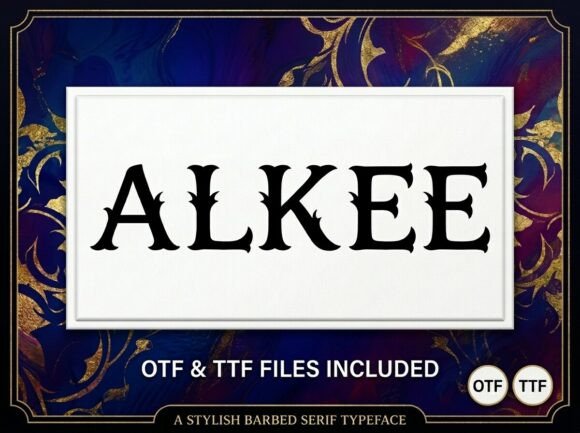
- Context is Key: Recognize that Alkee is an ALL-CAPS display typeface. It is specifically engineered for high-impact headlines, logos, and decorative initials. It is not intended for long-form body text, where readability is the primary concern.
- Ensure Compatibility: The provided OTF and TTF files offer universal compatibility. Use the OTF file in advanced design software like Adobe Creative Suite for full OpenType features, and the TTF file for broader use across different devices and applications.
- Maintain Visual Hierarchy: Pair a bold display font with a simpler, more neutral typeface for supporting text. This contrast creates a balanced composition, ensuring your design is both striking and easy to navigate.
- Test for Scalability: Before finalizing a design, test how the font renders at various sizes, from a small social media icon to a large print banner, to ensure it maintains its intended impact and clarity.
Ultimately, the tools you choose define the quality of your output. Thoughtful selection of typographic elements like Alkee allows designers and creators to inject personality, clarity, and professionalism into their work. By investing in quality creative assets, you enhance not only the aesthetic appeal of your projects but also the effectiveness of your visual communication, ensuring your message resonates powerfully with your intended audience.